Crafting Content for the Web
Strengthening Digital Presence with User-Centred Writing
Crafting Content for the Web
Strengthening Digital Presence with User-Centred Writing
Crafting Content for the Web
Strengthening Digital Presence with User-Centred Writing
Background
High-quality content is fundamental to effective digital experiences, yet many organisations struggle with content that fails to meet both user needs and organisational goals.
Content often becomes:
Outdated or duplicated
Inconsistent in tone and structure
Difficult to find
Written from an internal perspective rather than a user one
Disconnected from broader Information Architecture
Background
High-quality content is fundamental to effective digital experiences, yet many organisations struggle with content that fails to meet both user needs and organisational goals.
Content often becomes:
Outdated or duplicated
Inconsistent in tone and structure
Difficult to find
Written from an internal perspective rather than a user one
Disconnected from broader Information Architecture
Background
High-quality content is fundamental to effective digital experiences, yet many organisations struggle with content that fails to meet both user needs and organisational goals.
Content often becomes:
Outdated or duplicated
Inconsistent in tone and structure
Difficult to find
Written from an internal perspective rather than a user one
Disconnected from broader Information Architecture
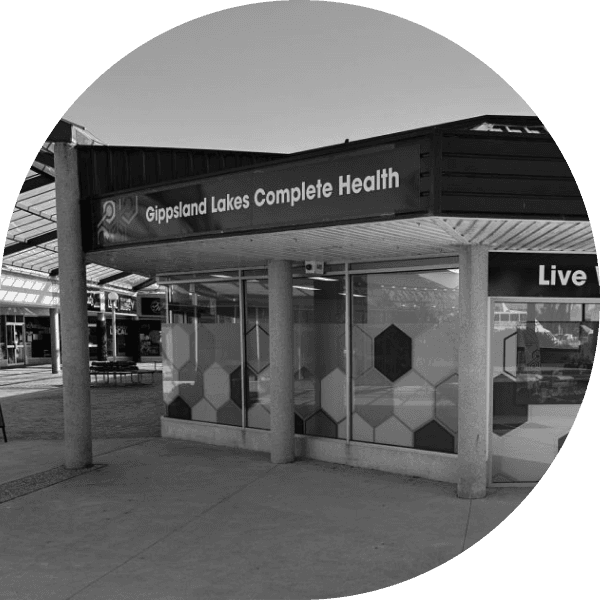
For organisations like Gippsland Lakes Complete Health (GLCH), cohealth and others, where users are often seeking health services during stressful or vulnerable moments, clarity and accessibility are not optional, they are essential.
At Nomat, we recognise that writing for the web goes far beyond editing copy. It requires understanding user intent, validating structure, defining governance and embedding sustainable content practices.
Across our engagements, we help organisations rethink how they assess existing content and reimagine it for improved clarity, usability and long-term performance.
For organisations like Gippsland Lakes Complete Health (GLCH), cohealth and others, where users are often seeking health services during stressful or vulnerable moments, clarity and accessibility are not optional, they are essential.
At Nomat, we recognise that writing for the web goes far beyond editing copy. It requires understanding user intent, validating structure, defining governance and embedding sustainable content practices.
Across our engagements, we help organisations rethink how they assess existing content and reimagine it for improved clarity, usability and long-term performance.
For organisations like Gippsland Lakes Complete Health (GLCH), cohealth and others, where users are often seeking health services during stressful or vulnerable moments, clarity and accessibility are not optional, they are essential.
At Nomat, we recognise that writing for the web goes far beyond editing copy. It requires understanding user intent, validating structure, defining governance and embedding sustainable content practices.
Across our engagements, we help organisations rethink how they assess existing content and reimagine it for improved clarity, usability and long-term performance.
What we did
To support GLCH, cohealth and other clients in taking a more strategic, human-centred approach to content, Nomat applied a structured review and rewrite methodology that blends research, analysis and collaborative decision-making.
What we did
To support GLCH, cohealth and other clients in taking a more strategic, human-centred approach to content, Nomat applied a structured review and rewrite methodology that blends research, analysis and collaborative decision-making.
What we did
To support GLCH, cohealth and other clients in taking a more strategic, human-centred approach to content, Nomat applied a structured review and rewrite methodology that blends research, analysis and collaborative decision-making.
1. Content Discovery & Audit
We began by understanding the current content landscape.
This included:
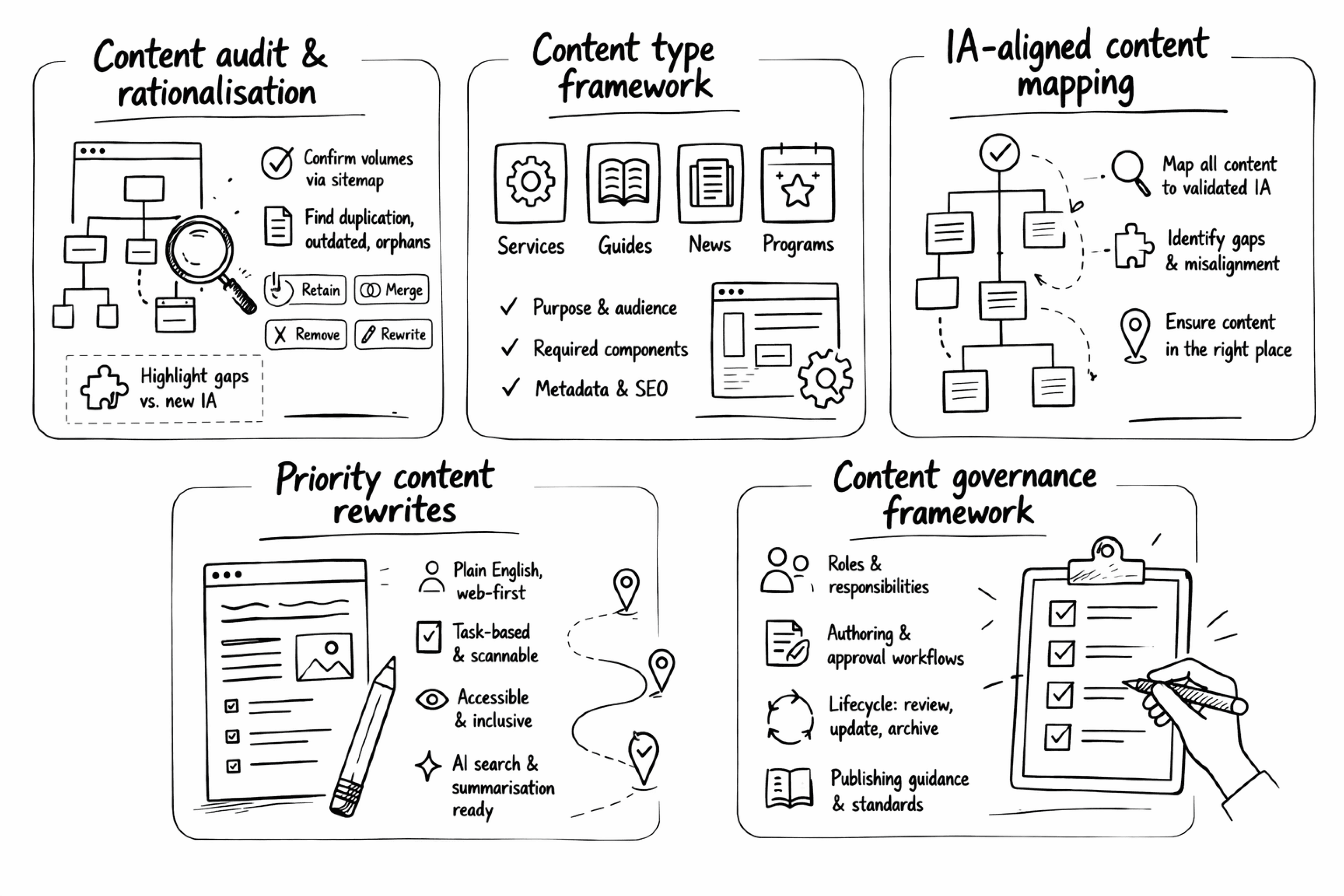
Conducting a structured content inventory
Reviewing page volumes and site architecture
Identifying duplication, outdated content and inconsistencies
Assessing readability levels
Reviewing search behaviour and analytics where available
Each page was categorised with a clear recommendation, retain, merge, remove or rewrite.
This process revealed content that was misaligned with key user journeys and internal priorities, enabling focused and strategic uplift rather than blanket rewriting.
1. Content Discovery & Audit
We began by understanding the current content landscape.
This included:
Conducting a structured content inventory
Reviewing page volumes and site architecture
Identifying duplication, outdated content and inconsistencies
Assessing readability levels
Reviewing search behaviour and analytics where available
Each page was categorised with a clear recommendation, retain, merge, remove or rewrite.
This process revealed content that was misaligned with key user journeys and internal priorities, enabling focused and strategic uplift rather than blanket rewriting.
1. Content Discovery & Audit
We began by understanding the current content landscape.
This included:
Conducting a structured content inventory
Reviewing page volumes and site architecture
Identifying duplication, outdated content and inconsistencies
Assessing readability levels
Reviewing search behaviour and analytics where available
Each page was categorised with a clear recommendation, retain, merge, remove or rewrite.
This process revealed content that was misaligned with key user journeys and internal priorities, enabling focused and strategic uplift rather than blanket rewriting.
2. User-Centred Research
Understanding how real users approach content was central to our work.
Through stakeholder workshops and interviews, we explored:
What users are trying to achieve when visiting key pages
Where confusion or friction occurs
How internal terminology differs from user language
Where appropriate, we incorporate card sorting, tree testing and search data analysis to validate content groupings and labels.
The goal is always to align content not just with organisational language, but with users’ mental models.
2. User-Centred Research
Understanding how real users approach content was central to our work.
Through stakeholder workshops and interviews, we explored:
What users are trying to achieve when visiting key pages
Where confusion or friction occurs
How internal terminology differs from user language
Where appropriate, we incorporate card sorting, tree testing and search data analysis to validate content groupings and labels.
The goal is always to align content not just with organisational language, but with users’ mental models.
2. User-Centred Research
Understanding how real users approach content was central to our work.
Through stakeholder workshops and interviews, we explored:
What users are trying to achieve when visiting key pages
Where confusion or friction occurs
How internal terminology differs from user language
Where appropriate, we incorporate card sorting, tree testing and search data analysis to validate content groupings and labels.
The goal is always to align content not just with organisational language, but with users’ mental models.
3. Content Framework & Templates
Sustainable content requires structure.
We defined recurring content types across the site, such as service pages, program pages and resource content, and created structured templates for each.
Each template included:
Defined page purpose
Primary audience
Required and optional components
Recommended heading structure
Metadata guidance
Clear calls to action
We also developed practical content guidance covering tone of voice, accessibility considerations and plain English standards.
These foundations made it easier for internal teams to create and maintain consistent, high-quality content.
3. Content Framework & Templates
Sustainable content requires structure.
We defined recurring content types across the site, such as service pages, program pages and resource content, and created structured templates for each.
Each template included:
Defined page purpose
Primary audience
Required and optional components
Recommended heading structure
Metadata guidance
Clear calls to action
We also developed practical content guidance covering tone of voice, accessibility considerations and plain English standards.
These foundations made it easier for internal teams to create and maintain consistent, high-quality content.
3. Content Framework & Templates
Sustainable content requires structure.
We defined recurring content types across the site, such as service pages, program pages and resource content, and created structured templates for each.
Each template included:
Defined page purpose
Primary audience
Required and optional components
Recommended heading structure
Metadata guidance
Clear calls to action
We also developed practical content guidance covering tone of voice, accessibility considerations and plain English standards.
These foundations made it easier for internal teams to create and maintain consistent, high-quality content.
4. Collaborative Rewrite & Review
Rewriting was delivered collaboratively with subject matter experts.
Nomat applied a structured web writing framework:
Plain English
Grade 9 reading level
Active voice
Scannable structure
Clear user tasks (3–5 per page)
Defined onward journeys
Workshops and review sessions ensured content was accurate, aligned and user-ready.
The result was content that was easier to scan, understand and act on — without losing organisational voice or integrity.
4. Collaborative Rewrite & Review
Rewriting was delivered collaboratively with subject matter experts.
Nomat applied a structured web writing framework:
Plain English
Grade 9 reading level
Active voice
Scannable structure
Clear user tasks (3–5 per page)
Defined onward journeys
Workshops and review sessions ensured content was accurate, aligned and user-ready.
The result was content that was easier to scan, understand and act on — without losing organisational voice or integrity.
4. Collaborative Rewrite & Review
Rewriting was delivered collaboratively with subject matter experts.
Nomat applied a structured web writing framework:
Plain English
Grade 9 reading level
Active voice
Scannable structure
Clear user tasks (3–5 per page)
Defined onward journeys
Workshops and review sessions ensured content was accurate, aligned and user-ready.
The result was content that was easier to scan, understand and act on — without losing organisational voice or integrity.
Services provided by Nomat:
Content inventories & audits
Content rationalisation & rewrite
Writing workshops & editorial sprints
Content templates & governance documentation
New service pages
Services provided by Nomat:
Content inventories & audits
Content rationalisation & rewrite
Writing workshops & editorial sprints
Content templates & governance documentation
New service pages
Services provided by Nomat:
Content inventories & audits
Content rationalisation & rewrite
Writing workshops & editorial sprints
Content templates & governance documentation
New service pages
Outcome
Through this structured approach, cohealth achieved:
Improved clarity across key service and program pages
Reduced duplication and outdated content
Clearer navigation pathways
Increased confidence in tone and consistency
A scalable framework for ongoing content production
Most importantly, content shifted from being reactive and fragmented to being intentional and user-driven.
Nomat’s approach ensures content isn’t just corrected, it becomes strategic. By grounding reviews and rewrites in research and structured frameworks, content becomes a driver of stronger digital experiences.
Outcome
Through this structured approach, cohealth achieved:
Improved clarity across key service and program pages
Reduced duplication and outdated content
Clearer navigation pathways
Increased confidence in tone and consistency
A scalable framework for ongoing content production
Most importantly, content shifted from being reactive and fragmented to being intentional and user-driven.
Nomat’s approach ensures content isn’t just corrected, it becomes strategic. By grounding reviews and rewrites in research and structured frameworks, content becomes a driver of stronger digital experiences.
Outcome
Through this structured approach, cohealth achieved:
Improved clarity across key service and program pages
Reduced duplication and outdated content
Clearer navigation pathways
Increased confidence in tone and consistency
A scalable framework for ongoing content production
Most importantly, content shifted from being reactive and fragmented to being intentional and user-driven.
Nomat’s approach ensures content isn’t just corrected, it becomes strategic. By grounding reviews and rewrites in research and structured frameworks, content becomes a driver of stronger digital experiences.
Interested to know more? Let’s Talk.
Interested to know more?
Let’s Talk.
Interested to know more? Let’s Talk.